
Government and Religious Institutions
Stranger in a Strange LandThis thread follows the political struggle over religious legitimacy, public order, and the government’s inability to contain Smith’s movement by conventional means.
increasing Bearing strength in each event
 decreasing
Bearing strength in each eventdecreasingThe Fosterite Machine
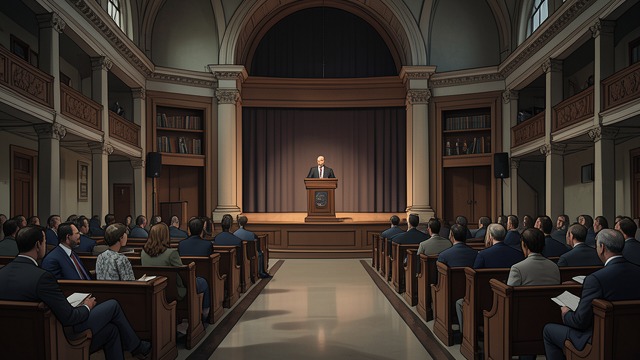
Religion as Mass Organization
A broad public church
Fosterism offers entertainment, material networks, and a promise of happiness. Its public activities mix worship with commerce and political mobilization.
An inner organization
Behind the public congregation, an inner group controls access and policy. Its structure demonstrates how religious exemptions can shelter powerful institutions.
Douglas’s Political Dilemma

Executive Power Under Strain
Competing interests
Joseph E. Douglas wants Smith’s cooperation but must manage scientists, rival political factions, and an interested public. His subordinates pursue tactics he may not fully control.
A fragile compromise
Harshaw forces Douglas to address Smith publicly and negotiate. Douglas’s decisions protect a temporary political settlement without ending the struggle over Mars.
The Church Is Challenged
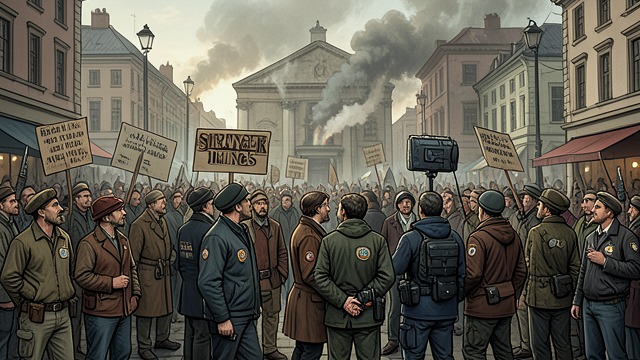
Legal Pressure Mounts
Accusations and enforcement
Local authorities charge the Church’s members with public lewdness, disorderly conduct, and related offenses. Fosterite leaders also condemn Smith’s movement as a rival.
A contest over legitimacy
Both sides use religious language and legal protections, but Smith’s community has fewer established alliances. Its disciplined private life becomes a target of public suspicion.
Temple and Jail
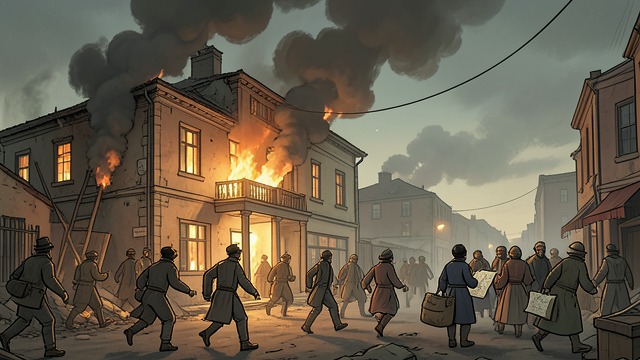
Institutions Collapse
Arrest and arson
Smith and several members are detained, while the Church’s temple is bombed and burns. The official story implies that the group has been destroyed.
Survival outside the record
Smith’s community escapes through means that ordinary witnesses cannot explain. The authorities’ apparent victory hides a more complete failure to control them.
A Crowd’s Verdict

Public Order Becomes Mob Rule
A crowd assembles
A hostile crowd gathers while media coverage frames Smith as a fugitive and fraud. He approaches voluntarily, offering the water of life and a message of shared responsibility.
Violence wins the moment
The crowd rejects his appeal and kills him before cameras. The spectacle exposes the limits of both law and religious rhetoric when fear has already hardened into collective violence.
Before Smith’s public career
During the first conflict over Smith’s custody
After the Church of All Worlds gains public attention
The night before the final confrontation
At the novel’s climax
